The Short-Lived Fire-Making Swiss Army Knives
Introduction
At the beginning of the 2000s, Victorinox briefly experimented with integrating a butane lighter directly into the Swiss Army Knife platform.
This concept produced two closely related models:
- SwissFlame
- CampFlame
Both knives combine the traditional 91 mm Swiss Army Knife architecture with a piezo-ignition butane lighter integrated into the structure, allowing the knife to produce an instant flame.
Although the idea was innovative, the experiment proved short-lived. Today the SwissFlame and CampFlame remain unusual collector pieces, remembered as one of the most ambitious but also most problematic technical experiments in Victorinox history.
I. Technical Overview
SwissFlame

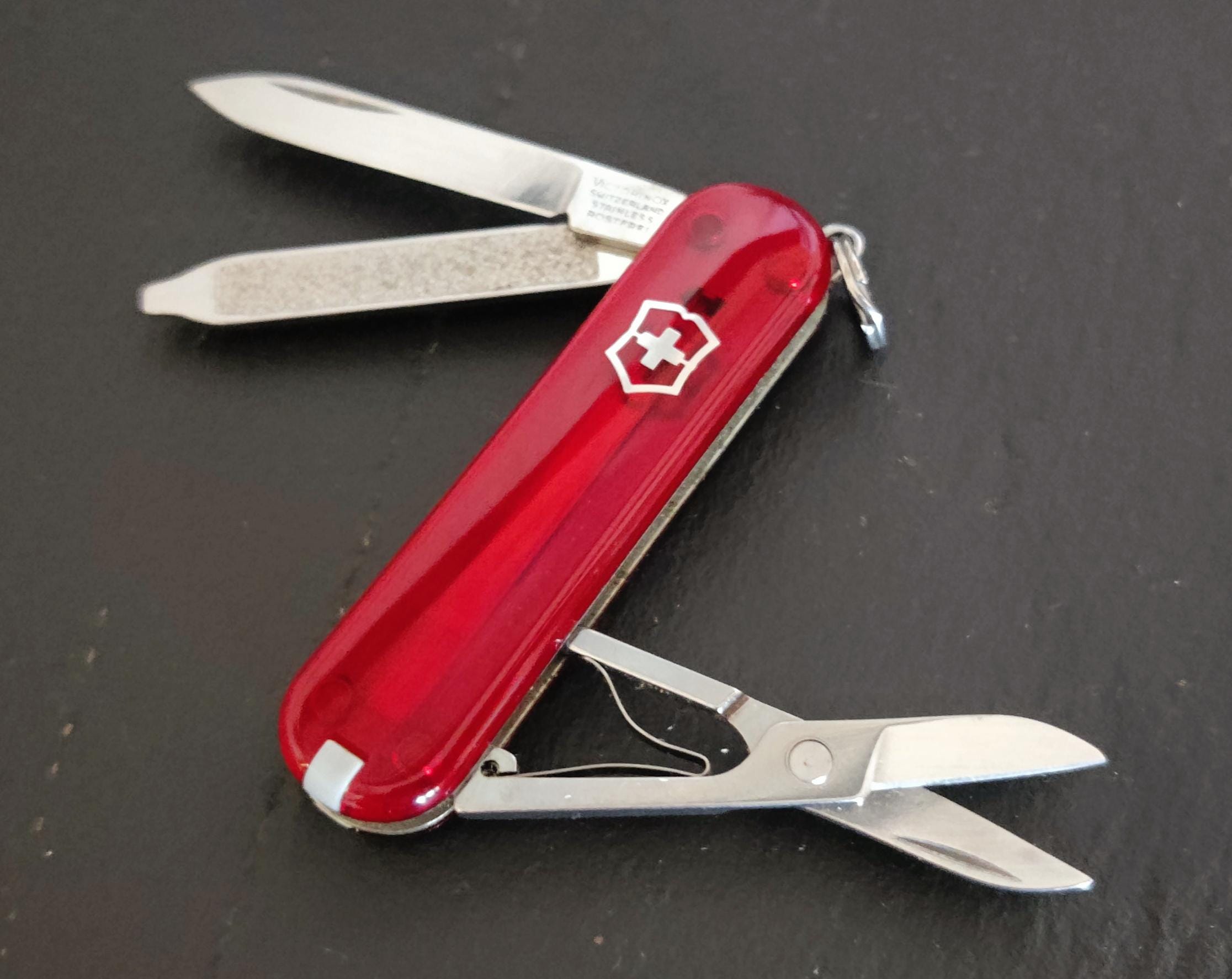
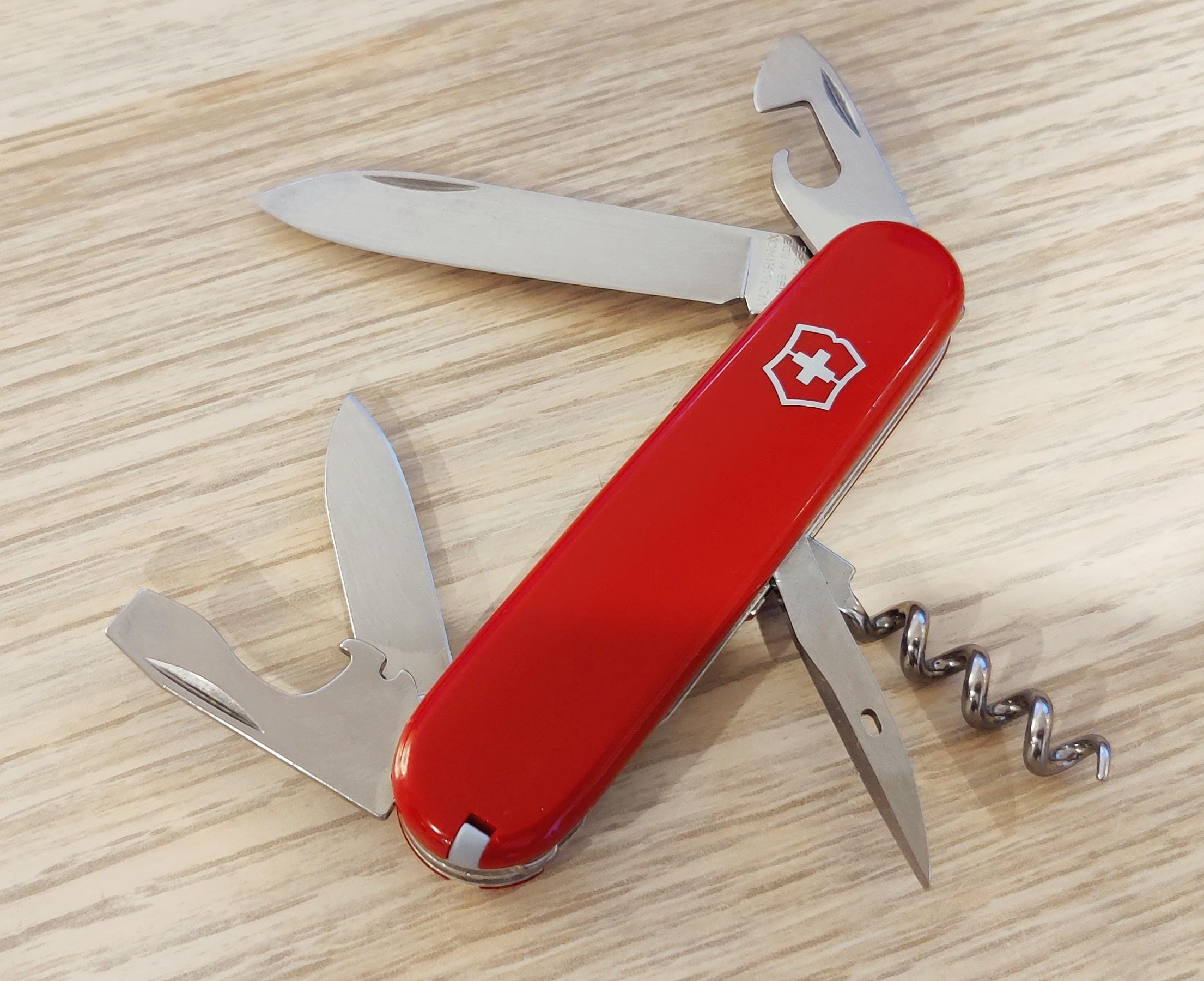
The SwissFlame is built on the architecture of the Climber, with the addition of the integrated lighter.
Architecture: 3 layers
Large blade
Small blade
Scissors
Can opener + small screwdriver
Bottle opener + large screwdriver + wire stripper
Back Layer Tools
Corkscrew
Reamer / awl
Scale Tools
Toothpick
Tweezers
CampFlame

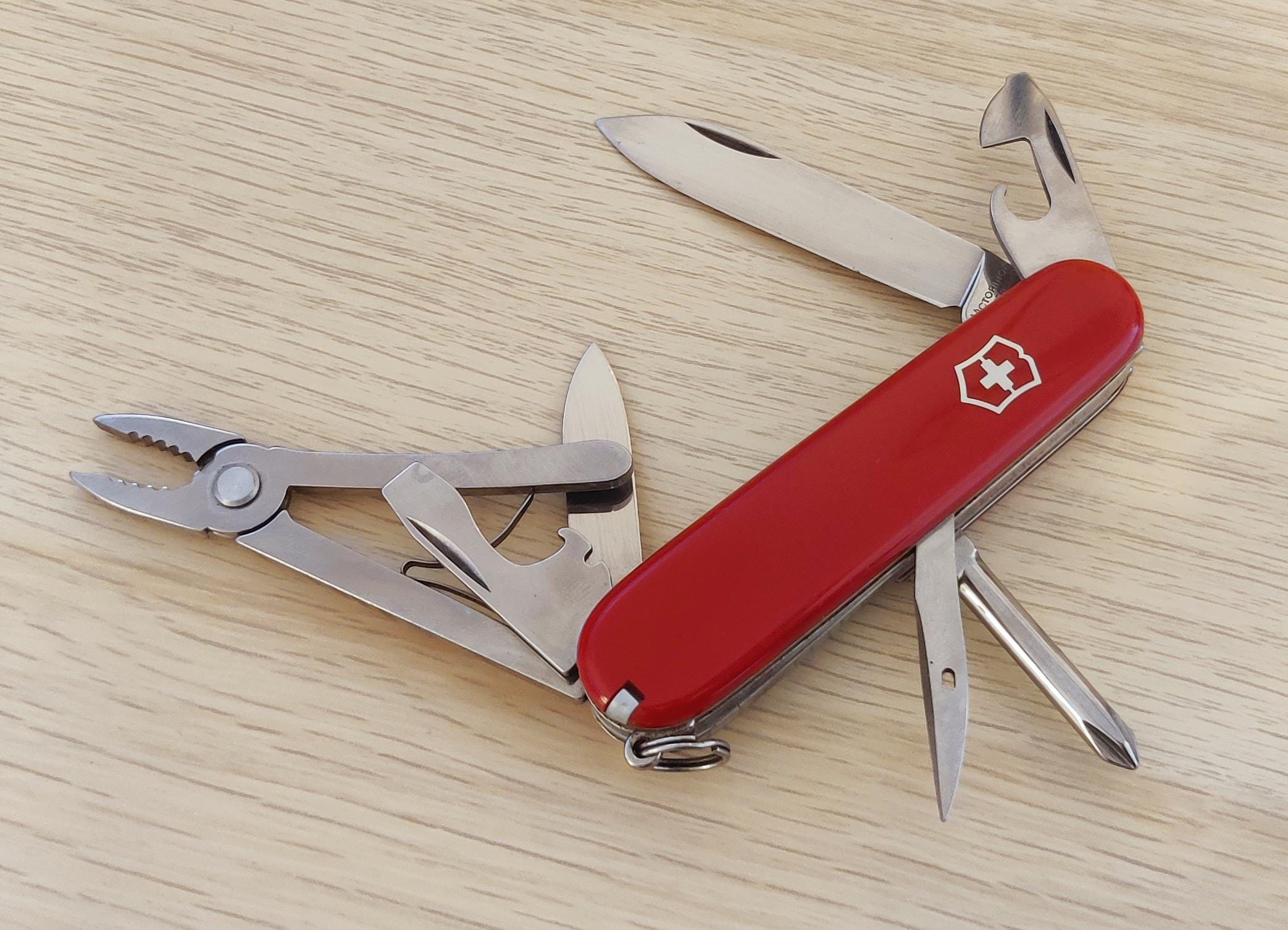
The CampFlame follows the same concept but uses the architecture of the Camper, replacing the scissors with a wood saw and back flat fine screwdriver
Architecture: 3 layers
Large blade
Small blade
Wood saw
Can opener + small screwdriver
Bottle opener + large screwdriver + wire stripper
Back Layer Tools
Corkscrew
Reamer / awl
Flat fine screwdriver
Scale Tools
Toothpick
Tweezers
Integrated Butane Lighter
Both models feature a piezo-ignition butane lighter integrated into the knife.

Swissflame User Manual
The lighter is:
- refillable with standard butane gas
- activated by a side button
- equipped with an adjustable flame
This allowed the knife to combine the traditional Swiss Army Knife tools with an instant fire source for outdoor use.
II. Early 2000s Experimentation
The SwissFlame and CampFlame appeared in 2002, during a period when Victorinox explored several technological extensions of the Swiss Army Knife concept.

Catalogue 2003
Other innovations from the same era include:
- electronic scale tools
- LED modules
- complex bit driver systems
The integrated lighter was part of this broader effort to expand the Swiss Army Knife beyond purely mechanical tools.
III. Reliability Problems and Rapid Discontinuation
Despite the appealing concept, the lighter system quickly revealed several design weaknesses.
Unlike most scale accessories, the lighter module was not designed to be easily removed. It was integrated directly into the knife structure and held in place by the knife’s riveted construction.
Collectors have consistently observed several recurring issues:
- gas seals tend to leak over time
- the exhaust nozzle frequently clogs, even when high-quality butane is used
- the ignition system becomes unreliable after limited use
Because of these problems, fully functional examples are extremely rare today. Even knives whose lighter still ignites are generally considered unsafe to rely on for regular use, as the system tends to fail again.
Another factor also limited the distribution of these knives. The SwissFlame and CampFlame were never officially marketed in the United States, where regulations concerning integrated butane lighters were stricter. The design also carried a risk of accidental activation in a pocket or bag, which complicated transport and distribution.
This combination of technical reliability issues and regulatory constraints appears to have led Victorinox to quickly discontinue both models, ending the experiment after only a short production period in the early 2000s. Replacement parts and warranty support for the lighter system were also discontinued soon after.
Ironically, a knife designed to make fire has become one of the few Swiss Army Knives collectors are careful not to ignite.
Collector Perspective and Significance
Today the SwissFlame and CampFlame are notable for several reasons:
- they are among the very few Victorinox knives ever produced with an integrated flame
- their production period was extremely short
- functional lighters have become very rare
- they existed in translucent red and translucent blue colors


Because of their unusual design and short production run, they remain distinctive collector pieces, representing an ambitious but ultimately unsuccessful experiment in Swiss Army Knife evolution.
Related Models
👉Climber
👉Camper
👉SwissChamp XXLT
Conclusion
The SwissFlame and CampFlame represent a fascinating attempt to push the Swiss Army Knife concept into new territory.
By integrating a butane lighter into the traditional 91 mm platform, Victorinox created knives capable of producing both tools and fire in a single compact device.
Although the concept proved unreliable and short-lived, these models remain a memorable chapter in the history of Victorinox innovation — and a reminder that even the most iconic tools sometimes experiment with fire.
This article is part of the SAKnife Archives, an independent collector-driven project dedicated to documenting Victorinox Swiss Army Knives. All photographs shown come from the SAKnife private collection unless otherwise noted. The historical and technical information presented here is based on period catalogues and expert collector databases. Additional material will be added as new information emerges.
Identify every Victorinox 91 mm configuration using the structural identification tree:
👉 🔎 Victorinox 91mm Identification Tree – Identify Your Swiss Army Knife by Toolset
Identify the production period of your Swiss Army Knife using the interactive visual tool based on tang stamps and tool evolution:
👉 ⌛ Swiss Army Knife Production Period Guide – Victorinox Interactive Tool Evolution
Explore the evolution of Victorinox 91 mm Swiss Army Knives and discover related model sheets in the historical timeline:
👉 📘 Swiss Army Knife History & 91 mm Model Evolution