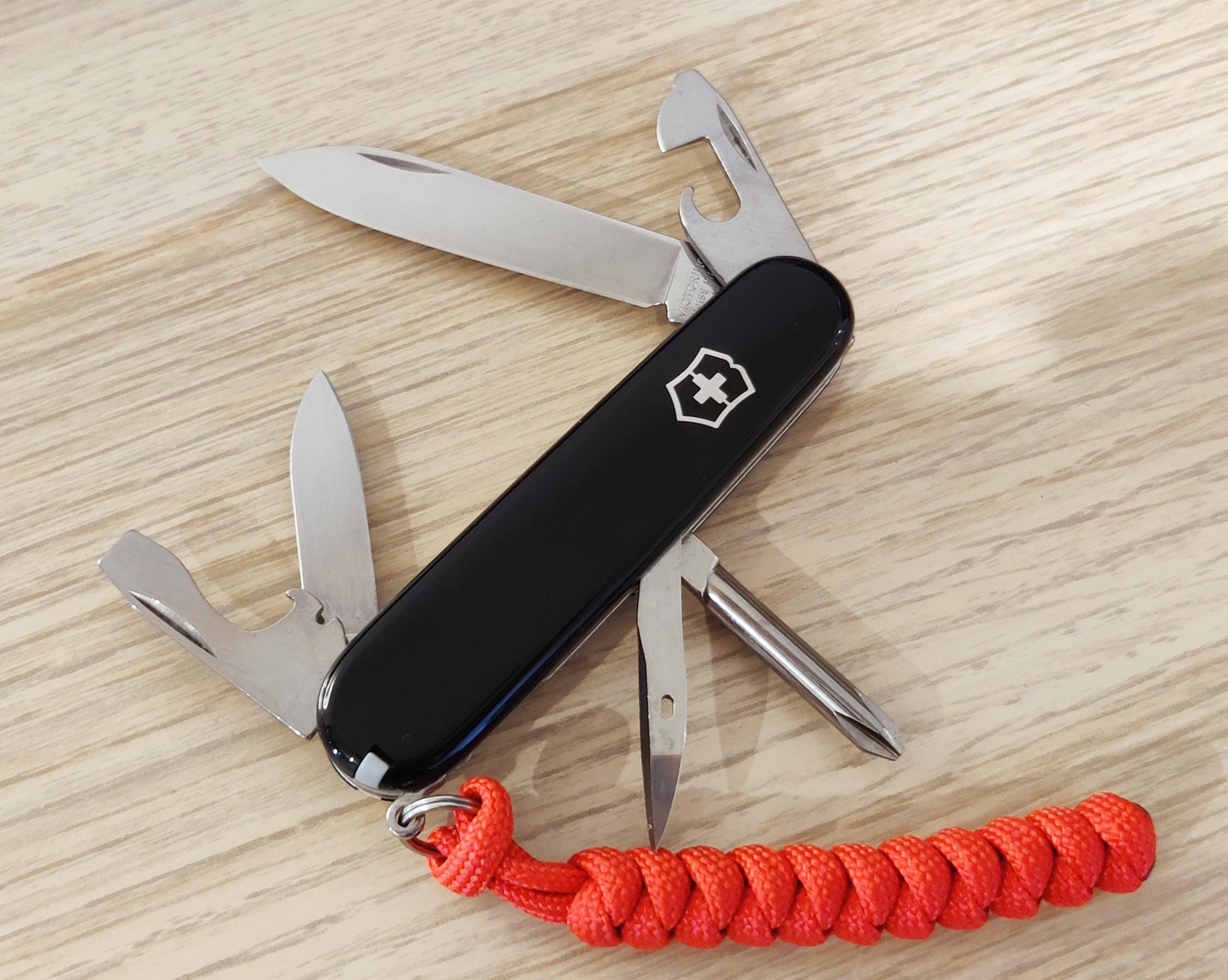
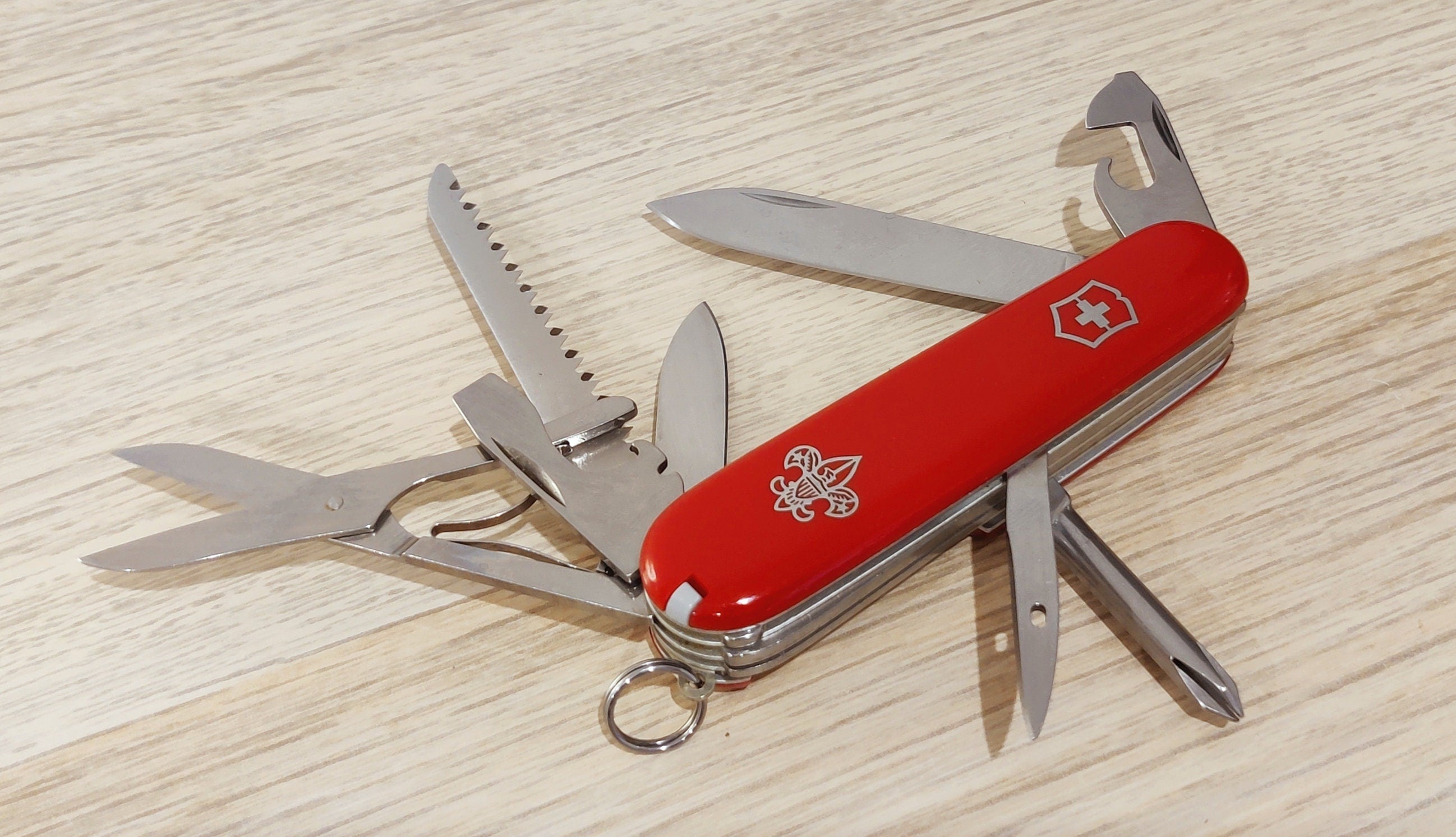
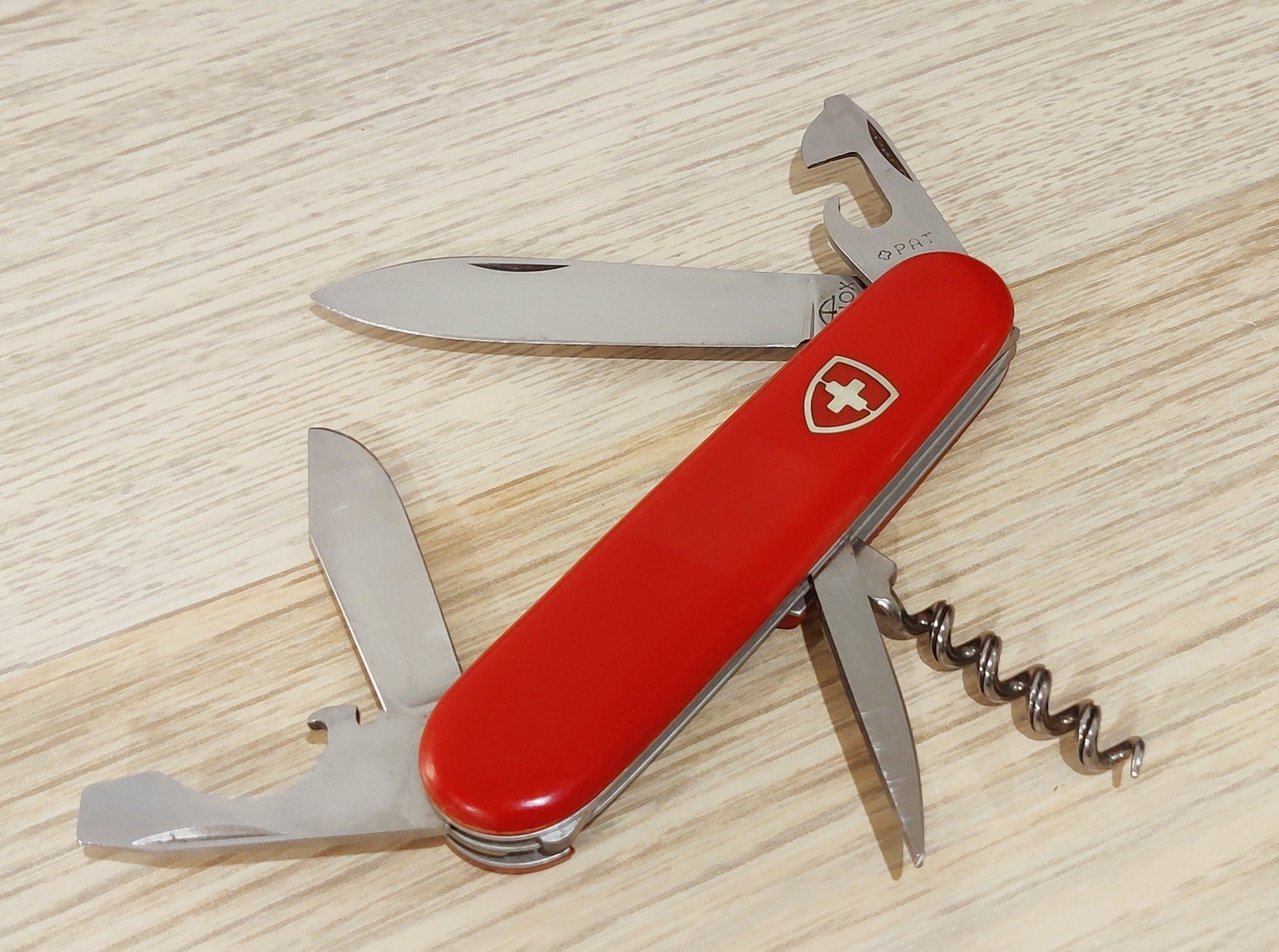
What Defines Victorinox Commemorative & Collector Metal Inlays?
Since the earliest days of Victorinox production, Victorinox commemorative metal inlays have represented a unique chapter in Swiss Army Knife history — distinct from utility, corporate, or catalogue usage. Designed not simply for everyday wear, these collector metal inlays were conceived as symbolic objects to be displayed, remembered, or gifted, reflecting institutional identity, civic pride, and historical memory.


This philosophy appears as early as the 1930s, making commemorative metal inlays one of the oldest and most intentional collector-oriented traditions in Victorinox history.
The examples shown here are drawn from the SAKnife collection and represent only part of a much wider commemorative tradition.
Rather than replacing function, these knives transcend it. Their value lies not in wear, but in meaning.
Swiss Roots: Identity, Place, and Memory in Early Victorinox Metal Inlays (1930s–1960s)
The Knife as a Symbolic Object
Early examples of Victorinox commemorative metal inlays embodied quintessential Swiss civic identity and were created as ceremonial keepsakes rather than functional tools. Victorinox naturally became a discreet yet durable medium for expressing civic identity, local pride, institutional continuity, and collective memory.
City coats of arms, municipal emblems, and civic mottos illustrate this tradition particularly well. These knives were typically produced in limited quantities, often presented during official events or preserved as ceremonial keepsakes.
They were not meant to circulate widely — they were meant to remain.
Swiss Institutions & the Culture of Service
Many institutional variants illustrate how collector metal inlays were awarded for service, honor, and civic recognition, reinforcing their symbolic rather than utilitarian intent.


Champion C with Geneve emblem and devise ''Past Tenebras Lux''

Tourist Victoria 1957-1961 RUTI

Tourist Victoria 1957-1961 Burgergemeinde
Fire brigades, police forces, military units, and civil protection organizations all appear across numerous commemorative inlay variants. These knives were often awarded rather than sold, reinforcing their role as symbolic gifts rather than utilitarian tools.

Climber Kantonspolizei St Gallen

Huntsman F/A 18 Hornet Swiss Air Force
Their frequently pristine condition today reflects their original intent: kept, displayed, and remembered.
Clubs, Local Events, and Swiss Associative Life
Beyond institutions, Victorinox also commemorated clubs, societies, and regional events, often tied to anniversaries or member-only occasions.

Examples such as the Jubiläumsschiessen 1968 in Ibach

or the Swiss Alpine Club show how these knives functioned as tokens of belonging, produced for remembrance rather than practical use.
Celebrating Victorinox Heritage Through Commemorative Inlays
By the late 20th century, metal inlays were also used to celebrate Victorinox itself.

Champion C 100 years anniversary of Victorinox


Also the Spartan or Swisschamp 100 Years anniversary of the Swiss Army Knife, explicitly positioned as official Victorinox collectibles, conceived from the outset to be preserved, collected, and displayed.
Historical Narratives in Metal Inlays: The Victorinox Battle Series
The Battle Series epitomizes the narrative potential of Victorinox commemorative metal inlays, with each knife marking a specific historic battle in Swiss memory.

Produced mainly during the 1980s and 1990s, this series features metal inlays depicting key battles of Switzerland. Each knife represents a specific battle, forming a coherent and historically themed collection.
-
Spartan Battle of Morgarten 1315 — Released 1983


-
Camper Battle of Laupen 1339 — Released 1984


-
Climber Battle of Sempach 1386 — Released 1985


-
Huntsman Battle of Näfels 1388 — Released 1986


-
Passenger Battle of St. Jakob an der Birs 1444 — Released 1987


-
234f Battle of Murten 1476— Released 1989


-
Mechanic Corkscrew Oath of Rütli 1291 — Released 1991


The Battle Series stands apart for its conceptual consistency and its focus on historical remembrance rather than functionality. Complete sets are now cornerstone pieces in advanced Swiss Army Knife collections.
From Swiss Memory to Global History: Apollo 11 Commemorative Metal Inlay
The 1989 Apollo 11 commemorative metal inlay remains iconic among advanced collectors, symbolizing a defining moment in global history on a Swiss Army Knife platform.
Released in 1989, this knife is commonly called the Craftsman Astronaut and features a metal inlay depicting that famous photo of Buzz Aldrin.
 👉🌕Victorinox Astronaut 1989 Apollo 11 commemorative Craftsman
It commemorates one of humanity’s defining moments and is widely regarded as a true Grail among Victorinox metal inlay collectors.
Here, the Swiss Army Knife becomes an object of historical memory, not a tool.
From Commemoration to Symbolic Marketing
This long-standing commemorative tradition naturally paved the way for more symbolic and marketing-oriented metal inlays.


Models such as the Classic SD Shamrock,

Star of David,

or U.S. Army–themed inlays from the 1980s adopted similar symbolic language, while being produced in greater numbers and aimed at a broader audience.
Despite this shift, the philosophy remained unchanged:
designed to be gifted, identified with, and remembered.
Collector Bonus – The Astronaut Inlay Returns (2017)
In a rare and meaningful callback, the Astronaut metal inlay was reissued in 2017. In the Victorinox I.N.O.X. Titanium Sky High set
This modern collector set features:
-
The historic Astronaut inlay, echoing the Apollo 11 commemorative model
-
A it was paired with a Victorinox Swiss Army watch (picture from the web)


Clearly conceived as a collector edition, this release bridges Victorinox’s space-age heritage with contemporary design. It stands not as a simple reissue, but as a respectful tribute to one of the most iconic commemorative metal inlays ever produced.
Conclusion: More Than Tools — Objects of Memory
Commemorative and collector metal inlays occupy a unique place in Victorinox history.
They are not simply tools, nor merely advertising pieces.
They are objects of memory, created to mark identity, celebrate heritage, and preserve moments in time.
The examples presented here serve as reference points, illustrating a tradition far broader than any single catalog or list — a field where discovery remains an essential part of collecting.
In these knives, the Swiss Army Knife becomes something more enduring than utility:
a symbolic gift, a display piece, and a collectible by design.
This analysis is based on documented Victorinox inlays produced for commemorative and collector purposes, supported by personnal collection and collector references. These metal inlays reflect intentional design choices and symbolic contexts, not common functional production lines.
See the transitional shift in:
👉Victorinox Metal Inlays 1973 – A Defining Transitional Year
Explore non-regular contexts in:
👉Victorinox Non-Regular Metal Inlays
This article is part of the Metal Inlays Thematic published in SAKnife Archives, a curated guide exploring the history, intent, and evolution of Victorinox metal inlay Swiss Army Knives.